
Roofing content marketing is defined as the strategic creation and distribution of educational, trust-building material that converts website visitors into paying customers. Most roofing contractors treat their website like a digital business card. That’s a costly mistake. 72% of homeowners abandon a roofing website after one visit if it fails to answer their first three core questions. For a mid-sized contractor running 150 jobs per year at $24,000 per roof, that abandonment rate translates to $2.7 million in lost revenue over five years. Content marketing, the industry term for this discipline, is not a blogging hobby. It is a lead generation engine, a trust mechanism, and a risk mitigation tool rolled into one.
How does content marketing generate roofing leads and improve conversion rates?
The direct relationship between relevant content and lead generation is measurable and significant. When a homeowner types “how long does a roof replacement take” or “what is the best shingle for Florida humidity,” they are signaling purchase intent. If your website answers that question clearly and completely, you capture that visitor. If it doesn’t, a competitor does.
Effective content for roofing lead generation falls into a few proven categories:
- Educational blog posts that answer the 12 core homeowner questions around cost, timeline, materials, and warranties
- Before-and-after project pages that demonstrate craftsmanship and build visual credibility
- Local area pages targeting specific cities or zip codes with relevant roofing information
- FAQ pages addressing ventilation codes, ASTM D3161 wind resistance ratings, and manufacturer warranty terms
- Video walkthroughs showing the installation process step by step
Each piece of content serves as a 24/7 sales representative. Unlike a Google Ads campaign that stops producing leads the moment you stop paying, a well-optimized blog post or service page continues attracting organic traffic for months or years. That near-zero marginal cost is what makes content the most capital-efficient channel in your roofing marketing strategies mix.
Pro Tip: Audit your last 20 sales calls and write down every question a homeowner asked before signing. Those questions are your content calendar for the next six months.

Why is trust and authority built through content marketing critical in roofing sales?
Trust is the primary purchase driver in a high-ticket, low-frequency transaction like roof replacement. A homeowner spending $18,000 to $30,000 is not buying on impulse. They research, compare, and verify. 68% of homeowners verify roofing specs against third-party sources like the NRCA or ASTM before signing a contract. If your content contradicts those sources, 34% of those prospects walk away entirely.
Accurate, detailed content does more than attract leads. It reduces operational friction after the sale. Well-crafted roofing content reduces callbacks by 40% by addressing homeowner expectations before the project starts. When a customer already understands why proper attic ventilation matters or what a drip edge does, they don’t call you three days after installation confused about what they paid for.
There is also a legal dimension most contractors ignore. Inaccurate warranty claims or unverified performance specs on your website can trigger FTC false advertising scrutiny. A Texas roofing contractor was fined $75,000 for misstating warranty terms online. That fine exceeds the profit margin on three or four average roofing jobs.
- Align all warranty language with manufacturer documentation from GAF, Owens Corning, or CertainTeed
- Reference ASTM D3161 and ASTM D3462 standards when discussing shingle performance
- Update content whenever product lines or local building codes change
- Never claim “lifetime warranty” without specifying the exact terms and transferability conditions
Pro Tip: Have your content reviewed against current NRCA guidelines and manufacturer spec sheets at least once per year. One inaccurate claim can cost more than your entire annual marketing budget.
What role do content clusters and modern SEO strategies play in roofing marketing success?
Content clusters are the most effective SEO structure for roofing companies in 2026. A content cluster consists of one authoritative pillar page, such as “Complete Guide to Roof Replacement,” supported by multiple interlinked subtopic pages covering materials, timelines, costs, permits, and warranties. Google’s 2026 algorithm prioritizes decision-based search, rewarding sites that demonstrate genuine expertise and trustworthiness across a topic rather than sites that target isolated keywords.
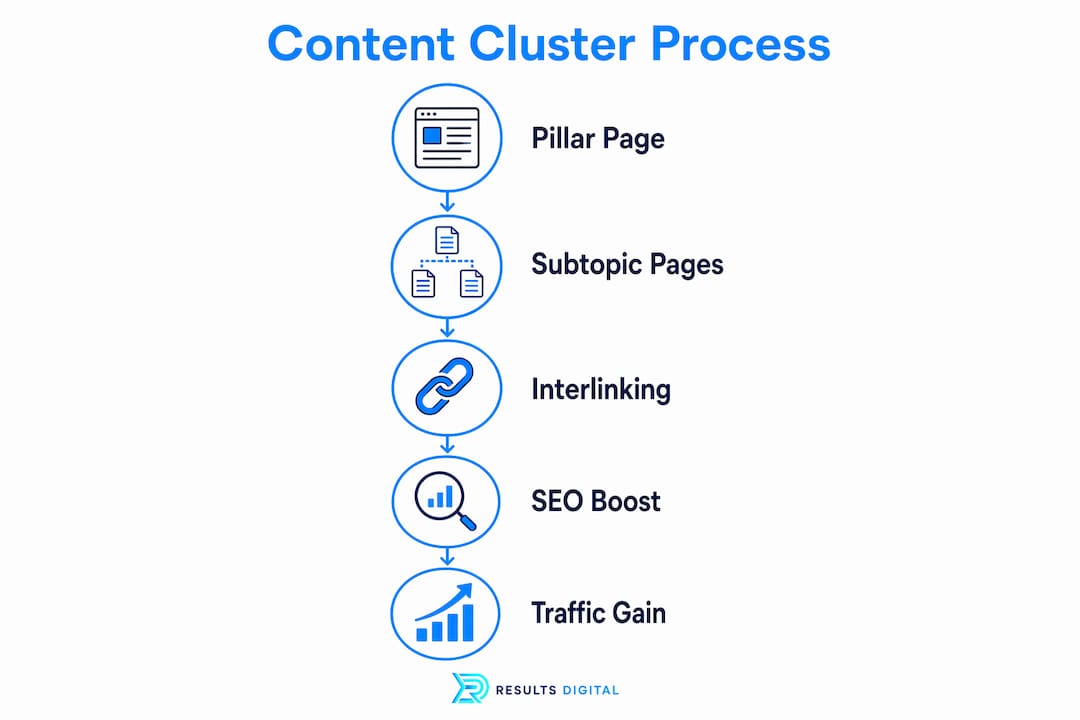
The performance data on clusters is concrete. Roofing firms using content clusters saw a 62% increase in organic traffic within six months. Clusters also capture up to 44% of Google Map Pack clicks and 27% of organic search results. That is not a marginal improvement. That is a structural competitive advantage. Clusters aligned with decision-based search intent reduce cost per lead by 42%, which directly improves your return on every dollar spent on SEO for roofers.
| Approach | Organic traffic impact | Cost per lead impact |
|---|---|---|
| Single keyword pages | Minimal, siloed ranking | Higher, no topical authority |
| Content cluster model | 62% traffic increase in 6 months | 42% reduction in cost per lead |
| No content strategy | Near-zero organic visibility | Entirely dependent on paid ads |
Pro Tip: Start your cluster with one pillar page targeting your highest-value service, then build five to seven subtopic pages around it before moving to a new cluster. Depth beats breadth every time.
How does roofing content marketing fit into a broader multi-channel marketing approach?
Content marketing is not a standalone tactic. It is the compounding asset that makes every other channel in your portfolio work harder. Think of it this way: your Google Ads campaign drives a homeowner to your landing page. If that page has no educational content, no project photos, and no answers to their questions, your ad spend is wasted. Content is what converts the traffic your paid campaigns generate.
The average roofing company spends 8 to 12% of revenue on marketing, and the companies that produce the best results run a portfolio approach across multiple channels. A well-structured portfolio looks like this:
- Always-on SEO content producing 20 to 40 organic leads per month in stable weather conditions
- Google Ads and Local Service Ads capturing high-intent searches during peak season
- Meta Ads building brand awareness and retargeting website visitors who didn’t convert
- Reputation management turning completed jobs into five-star reviews that reinforce content credibility
- Storm-response campaigns scaling paid spend to 200 to 400 leads per month after weather events
Roofing companies relying only on storm marketing experience feast-or-famine revenue cycles. Content marketing is the stabilizer. It produces leads in January when no storms have hit and no one is running ads. That consistent baseline is what separates contractors who scale from those who scramble. Explore how digital marketing for roofers integrates these channels into a single, cohesive system.
What best practices and pitfalls should roofing professionals know about content marketing?
Most roofing contractors who fail at content marketing make the same mistakes. They publish generic posts about “the importance of a good roof,” they ignore local search intent, and they never update their content after the first publish date. These are not minor oversights. They are the difference between a content library that generates leads and one that sits invisible on page four of Google.
The most effective starting point is a revenue audit. Proactive revenue audits identifying homeowners’ 12 main questions improve content effectiveness and reduce sales call time. When you answer those questions in writing before a prospect ever calls you, you attract better-qualified leads and shorten your close cycle.
- Avoid vague performance claims. “Our shingles last longer” is not a claim. “Our GAF Timberline HDZ shingles carry a Class 4 impact resistance rating under UL 2218” is a claim.
- Write for your local market. A roofing company in Houston faces different concerns than one in Minneapolis. Hail frequency, humidity, and local code requirements should shape your content.
- Update content regularly. Product lines change, building codes update, and Google rewards freshness. A content page from 2021 that still references discontinued shingle lines is actively hurting your credibility.
- Balance technical depth with plain language. Explain what ASTM D3161 means in plain terms. Your customer doesn’t know the standard number. They do care that their roof can handle 110 mph winds.
Explore engaging roofing content ideas that go beyond basic blog posts and actually move prospects through your sales funnel.
Key takeaways
Roofing content marketing works because it generates organic leads at near-zero marginal cost, builds trust that closes high-ticket sales, and reduces operational disputes through proactive customer education.
| Point | Details |
|---|---|
| Content drives lead generation | Answering homeowners’ core questions captures traffic and prevents the $2.7M revenue loss from site abandonment. |
| Trust reduces disputes and callbacks | Accurate, detailed content cuts callbacks by 40% and lowers customer disputes by addressing expectations before the sale. |
| Content clusters dominate search | Cluster-based SEO produces a 62% organic traffic increase and cuts cost per lead by 42% within six months. |
| Portfolio marketing requires content | Content stabilizes lead flow between storm events and improves conversion rates across paid channels. |
| Accuracy protects your business | Inaccurate warranty or performance claims expose you to FTC liability, as demonstrated by a $75,000 fine in Texas. |
What I’ve learned after years of watching contractors get this wrong
Most roofing contractors I work with come to Resultsdigitalus after spending years treating content as an afterthought. They’ve run Google Ads, bought leads from aggregators, and chased storm work. Then they hit a slow season and realize they have no organic presence, no brand authority, and no pipeline that doesn’t require a check to keep running.
The contractors who scale consistently share one trait: they treat their content library as a business asset, not a marketing expense. A well-built content cluster is not a blog post. It is a lead generation system that compounds in value over time. The Florida roofing company we helped grow from 3 crews to 18 before a $60 million exit did not get there on paid ads alone. Their digital authority, built through consistent, accurate, locally relevant content, made their business worth acquiring.
The uncomfortable truth is that most roofing content published today is generic, inaccurate, or both. Contractors copy competitor pages, paste in manufacturer descriptions, and call it done. That content does not rank, does not convert, and does not build trust. The bar is low, which means the opportunity for contractors willing to do it right is significant.
Treat content as your best sales rep. It works every hour of every day, never misquotes a warranty, and never forgets to mention your financing options.
— Results
Ready to build a content strategy that actually generates roofing leads?
Resultsdigitalus builds content and SEO systems exclusively for roofing contractors, gutter companies, siding businesses, and general contractors across the United States. Every strategy is built around your market, your services, and your growth goals. No generic templates. No shared campaigns. One contractor per trade per market.

If your website is not generating consistent organic leads, the content strategy is almost certainly the gap. Resultsdigitalus has helped roofing companies scale from startup operations to multi-crew businesses with sustainable, compounding digital assets. Explore our roofing SEO services or get a full picture of what a digital marketing system built for contractors looks like in practice.
FAQ
What is roofing content marketing?
Roofing content marketing is the creation of educational, trust-building material, including blog posts, service pages, and videos, designed to attract homeowners, answer their questions, and convert them into leads.
How does content marketing generate roofing leads?
Content marketing captures homeowners at the research stage by answering their core questions about cost, materials, and timelines, turning organic search traffic into qualified leads without ongoing ad spend.
How long does it take for roofing content to rank on Google?
Content clusters built around roofing topics typically show measurable organic traffic gains within three to six months, with roofing firms reporting a 62% traffic increase within that window using a cluster-based SEO approach.
Can inaccurate roofing content create legal problems?
Yes. Misstating warranty terms or performance specs on your website can trigger FTC false advertising claims. One Texas roofing contractor was fined $75,000 for inaccurate warranty language published online.
How does content marketing fit with Google Ads for roofers?
Content marketing and Google Ads work together. Paid ads drive traffic to your pages, and strong educational content converts that traffic into leads. Without content, ad spend produces clicks but not customers.
