
Siding lead generation is defined as the targeted process of attracting homeowners who need siding installation, repair, or replacement through digital and traditional marketing channels. In the industry, this practice falls under contractor lead acquisition, and it covers everything from local SEO and Google Ads to direct mail and referral networks. The stakes are high: qualified siding projects typically range from $8,000 to $25,000 or more for a full home re-siding. That project value means one well-placed campaign can pay for months of marketing. The contractors who win consistently are the ones who treat lead generation as a system, not a one-time tactic.
What is siding lead generation and which digital channels drive it?
Siding lead generation in 2026 runs primarily through digital channels, and local SEO sits at the top of the list. Homeowners searching “siding contractor near me” or asking a voice assistant for recommendations are already in buying mode. Showing up in those results is not optional if you want consistent work.
Here are the core digital channels every siding contractor should use:
- Local SEO and Google Business Profile. Your Google Business Profile is the first thing most homeowners see. Google Business Profile optimization remains the highest-ROI engine for siding lead generation, especially for “near me” and voice searches. Keep your photos current, respond to every review, and post updates weekly.
- Google Ads and Local Services Ads (LSAs). Google Ads put you at the top of search results immediately. LSAs go further by showing a “Google Guaranteed” badge, which builds instant trust. Fast response time is critical with LSAs because the same lead may go to multiple contractors. Call back within five minutes or you lose the job.
- Negative keyword lists. Negative keyword lists filter out low-value traffic like DIY searches or job seekers. This protects your ad budget for homeowners who are ready to hire. Without them, you are paying for clicks that will never convert.
- Paid social media. Meta and YouTube ads work well for visual storytelling. Before-and-after siding photos and short video walkthroughs perform especially well. Use retargeting to follow up with homeowners who visited your website but did not call.
- Conversion tracking. Every campaign needs call tracking and form submission tracking. Without this data, you are flying blind on which ads are actually producing booked jobs.
Combining paid advertising with organic SEO builds brand trust and improves close rates by aligning landing pages with buyer intent. A homeowner who sees your Google Ad and then finds your website ranking organically is far more likely to call than one who sees only a single touchpoint.
Pro Tip: Run your Google Ads for siding and your organic SEO simultaneously. Contractors who appear in both paid and organic results get a credibility signal that solo-channel competitors cannot match.

How do traditional methods complement digital siding lead generation?
Digital channels dominate, but traditional marketing methods like direct mail, yard signs, and local referrals continue to generate leads by reaching homeowners who are not actively searching online. These tactics build brand recognition in specific neighborhoods, which pays off when a homeowner finally decides to call.
The most effective traditional tactics for siding contractors include:
- Yard signs. Place a branded sign at every job site with your phone number and website. Neighbors notice new siding. A yard sign turns your active job into a passive advertisement for the entire street.
- Direct mail. Targeted mailers sent to specific zip codes or neighborhoods produce measurable results. Time them around spring and fall, when homeowners are most likely to schedule exterior work.
- Door hangers and fliers. Drop them within a three-block radius of every active job. Homeowners who see your crew working nearby are warm leads. They have already seen your work in person.
- Referral networks. Build relationships with roofers, window installers, and real estate agents. These trades interact with the same homeowners you want to reach. A referral from a trusted trade partner closes faster than any cold lead.
The real power of traditional marketing is brand saturation in a defined area. When a homeowner in a target neighborhood has seen your yard sign, received your mailer, and heard your name from a neighbor, your call is the first one they make.
Pro Tip: Time your direct mail drops to arrive the week after a major storm or hail event in your service area. Homeowners are already thinking about exterior damage, and your mailer lands at exactly the right moment.
Why does exclusivity in siding leads matter for your profitability?
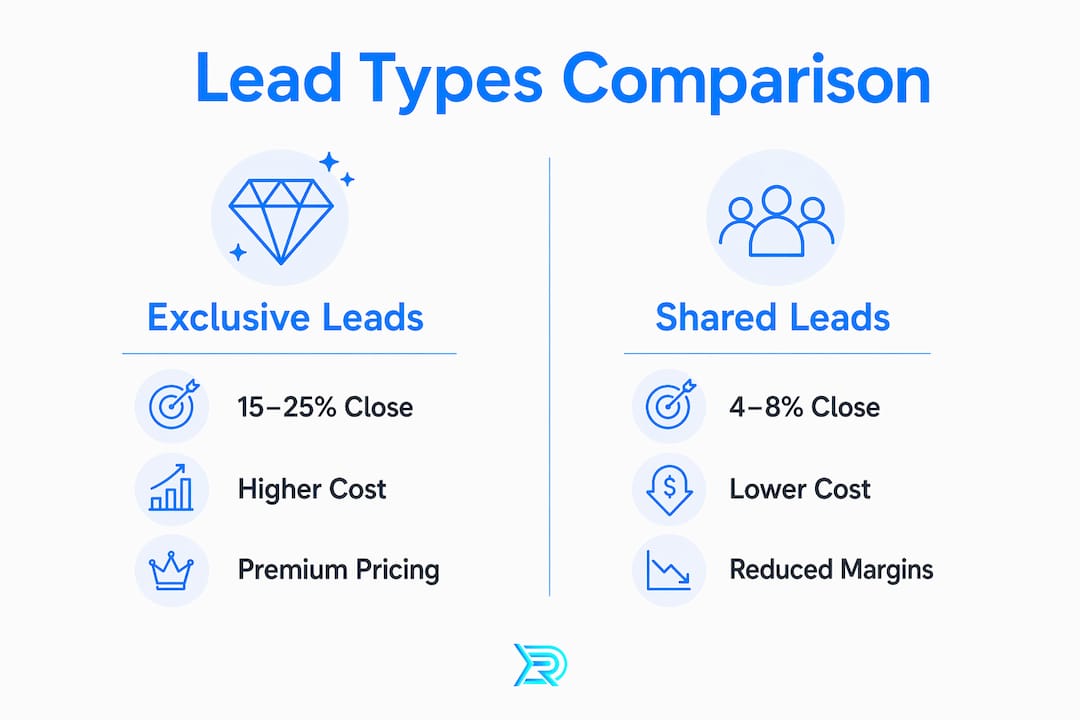
Exclusive leads are defined as leads sold to only one contractor. Shared leads are sold to multiple contractors at the same time. The difference in outcome is significant.
Exclusive siding leads produce close rates of 15–25%, while shared leads typically close at 4–8%. That gap directly affects your revenue and your sales team’s morale. When your team calls a shared lead, they are racing against two or three other contractors. When they call an exclusive lead, they are the only option on the table.
| Lead type | Typical close rate | Cost per lead | Key advantage |
|---|---|---|---|
| Exclusive leads | 15–25% | $41–$99 | No competition per record |
| Shared leads | 4–8% | Lower upfront | Immediate availability |
Shared lead lists reduce profit margins and waste sales team time because multiple companies contact the same homeowner. The homeowner gets overwhelmed with calls and often picks the lowest bidder. You lose on price, not quality.
Exclusive leads also support premium pricing. Siding contractors who invest in brand recognition can charge 15–25% more than the lowest bidder because homeowners pay premiums for companies they recognize and trust. When your lead pipeline is exclusive and branded, you are not competing on price. You are competing on reputation.
Exclusive lead generation platforms run campaigns through the contractor’s own ad account. This means you retain pixel data, retargeting audiences, and brand presence. When you stop paying a shared lead service, you lose everything. When you own your ad account, you keep the data.
Pro Tip: Before signing with any lead service, ask one question: “Is this lead sold to anyone else?” If the answer is yes or unclear, walk away. The exclusivity advantage is too significant to trade for a lower cost per lead.
Best practices to maximize lead conversion for siding contractors
Generating leads is only half the job. Converting them into booked projects is where the money is made. The contractors who win at this stage treat lead management as seriously as they treat the work itself.
- Integrate a CRM with automation. CRM integration with automation for callback scheduling, auto-texts, and follow-up sequences keeps leads from falling through the cracks. A lead that does not hear from you within an hour is likely calling your competitor.
- Segment your leads. Sort incoming leads by project type (repair vs. full replacement), material interest (vinyl, fiber cement, wood), and service area. Segmented leads get more relevant follow-up, which improves conversion rates.
- Use drip email campaigns. Not every lead is ready to book on the first call. A short email sequence with project photos, financing options, and customer reviews keeps your company top of mind for homeowners who are still deciding.
- Build a referral program. Offer past customers a referral incentive, such as a gift card or discount on future work. A referred lead closes faster and at a higher rate than any cold digital lead.
- Track cost per booked job, not cost per lead. A $150 lead converting at 40% is more profitable than a $50 lead converting at 10%. Focusing only on lead cost is a trap that keeps contractors stuck with cheap, low-quality traffic.
Pro Tip: Pair your lead generation with a content marketing strategy. Short blog posts answering questions like “How long does siding last?” or “What is the best siding for cold climates?” attract homeowners early in their research phase. By the time they are ready to call, they already trust you.
Key Takeaways
Siding lead generation works best when exclusive digital leads, local SEO, and traditional outreach combine with disciplined conversion tracking and CRM follow-up.
| Point | Details |
|---|---|
| Define your lead type | Exclusive leads close at 15–25% vs. 4–8% for shared leads. |
| Own your ad account | Retain pixel data and retargeting audiences by running campaigns through your own account. |
| Track the right metric | Measure cost per booked job, not cost per lead, to evaluate true campaign profitability. |
| Combine channels | Pairing paid ads with organic SEO lifts close rates by building homeowner trust across touchpoints. |
| Automate follow-up | CRM automation and drip campaigns prevent qualified leads from going cold before you book the job. |
What I have learned about siding lead generation after years in the field
Most contractors I talk to are focused on the wrong number. They want to know the cost per lead. That number feels concrete and easy to compare. But it tells you almost nothing about whether your marketing is actually making you money.
The metric that matters is cost per booked job. A contractor paying $99 for an exclusive lead that closes 25% of the time is paying $396 per booked job. A contractor paying $40 for a shared lead that closes 5% of the time is paying $800 per booked job. The “cheaper” lead is twice as expensive when you do the math.
The other thing I see contractors get wrong is treating paid and organic as separate strategies. They are not. Homeowners who see your Google Ad and then find your website ranking organically treat you like the obvious choice. That trust signal is worth more than any single ad placement.
Exclusivity is not a luxury. For a siding contractor running a serious operation, it is the baseline. Your sales team’s time and energy are finite. Every call they make to a shared lead that has already been contacted by three other contractors is a call they are not making to a warm, exclusive prospect. Protect that energy.
The contractors who build durable lead pipelines do three things consistently. They own their ad accounts. They track cost per booked job. And they never stop building their brand in the neighborhoods where they work.
— Results
How Resultsdigitalus builds exclusive siding lead pipelines
Resultsdigitalus builds digital marketing for siding companies that produces exclusive, high-intent leads, not shared lists sold to your competitors. Every campaign runs through your own ad account, so you own the data, the pixel, and the retargeting audiences from day one.
The agency covers SEO, Google Ads, Meta Ads, and custom website design, all built specifically for siding contractors. Resultsdigitalus partners with only one siding company per market, so your campaigns work solely for you. No long-term contracts. No shared leads. Just a system built to fill your calendar with qualified homeowners ready to buy. Talk to the team and find out if your market is still available.
FAQ
What is siding lead generation?
Siding lead generation is the process of attracting homeowners who need siding installation, repair, or replacement through digital channels like SEO and Google Ads, as well as traditional methods like direct mail and referrals. Qualified siding projects typically range from $8,000 to $25,000 or more.
What are siding leads?
Siding leads are contact records for homeowners who have expressed interest in siding services, either by submitting a form, calling a contractor, or responding to an ad. High-quality siding leads are exclusive, meaning they are sent to only one contractor.
How do I get more siding leads fast?
Google Ads and Local Services Ads produce the fastest results because they place your business in front of homeowners who are actively searching for a contractor right now. Pair them with a strong Google Business Profile for maximum visibility.
Why do exclusive leads outperform shared leads?
Exclusive siding leads close at 15–25% compared to 4–8% for shared leads, because your sales team contacts the homeowner without competing against other contractors simultaneously. That single-contact advantage reduces sales burnout and increases revenue per lead.
How should I measure siding lead generation success?
Track cost per booked job rather than cost per lead. A higher cost per lead that converts at a strong rate will almost always outperform a cheap lead with a low close rate, producing a lower actual acquisition cost per signed contract.
