
Facebook and social media marketing for roofing companies is defined as the use of paid ads, organic content, and community engagement on platforms like Facebook and Instagram to generate local leads, build trust, and grow revenue. Roofing is a high-ticket, high-trust sale. Homeowners do not hire the cheapest roofer they find. They hire the one they recognize, trust, and feel comfortable inviting onto their property. 71% of U.S. adults use Facebook daily, and 58% of homeowners aged 30–49 check it every day. That is your customer base, scrolling through their feed right now. The question is whether your company shows up when they need a new roof.
What social media platforms and content types work best for roofing companies?
Facebook and Instagram are the two platforms every roofing company should prioritize. Facebook delivers the broadest reach among homeowners aged 30–55, the demographic most likely to own a home and need roof work. Instagram captures a younger, visually driven audience and feeds directly into Facebook’s ad system through Meta’s shared infrastructure.
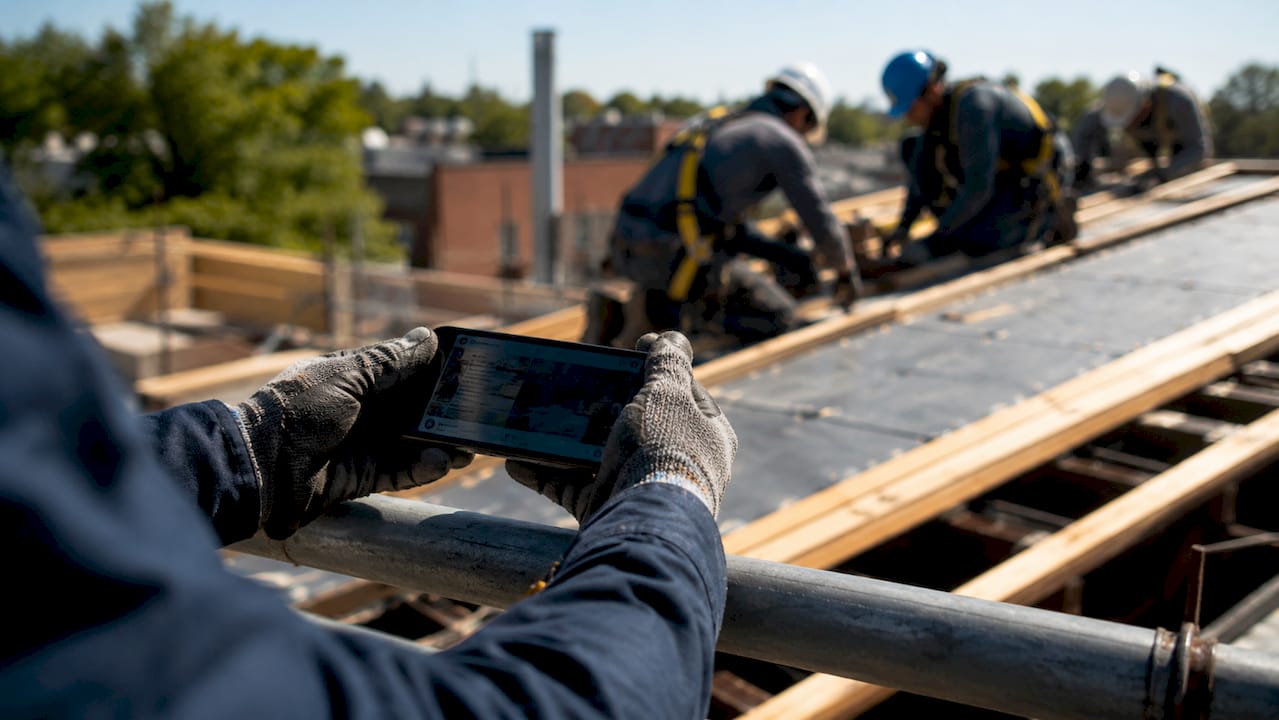
The content that performs best is visual and local. Generic stock photos of shingles do not build trust. Real photos of your crew working on a job in the customer’s neighborhood do.
High-performing content types for roofing companies:
- Before-and-after photos: Show the full transformation from damaged or worn shingles to a finished roof. These posts generate strong engagement because they prove your work.
- Drone footage: Aerial video of a completed project gives homeowners a perspective they cannot get from the ground. It also signals that your company invests in quality.
- Crew spotlights: Introduce your team by name and face. Showcasing your crew and neighborhood work builds more trust than any polished corporate ad.
- Customer testimonial videos: A 30-second clip of a satisfied homeowner carries more weight than five paragraphs of marketing copy.
- Storm damage education: Short posts explaining what hail damage looks like, or when to call for an inspection, position you as the local expert.
- Stories and Reels: Short-form video content on Facebook and Instagram gets prioritized by the algorithm and reaches people who do not already follow you.
Use localized hashtags tied to your city or county. Tag the neighborhood when you post a completed job. These small details tell the platform’s algorithm that your content is relevant to local users, which expands your organic reach without spending a dollar.
Pro Tip: Film a 60-second Reel walking through a completed job site. Show the old roof, the crew working, and the finished product. Post it with the neighborhood name in the caption. This single content type consistently outperforms static image posts for roofing companies.
How to implement targeting and ad strategies on Facebook for maximum roofing leads
Facebook advertising for roofing companies works because the platform lets you target the exact homeowner most likely to need your service, in the exact zip code you serve.
Here is how to build a targeting and ad strategy that produces real leads:
- Set your geographic radius. Target a 15–25 mile radius around your primary service area. Tighten it to specific zip codes after a storm event, when demand spikes and competition for attention is highest.
- Filter by homeowner status and income. Facebook’s detailed targeting lets you filter by homeowner status and household income. Focus on households earning $75,000 or more annually. These homeowners are more likely to approve a full replacement rather than a patch job.
- Use lookalike audiences. Upload your past customer list to Facebook and build a lookalike audience. Facebook finds users who share the same demographics and behaviors as your best customers.
- Run storm-triggered geo-fencing campaigns. After a hail event, target the affected zip codes immediately. Storm-based geo-fencing has produced documented results of $650 in ad spend generating $120,000 in revenue for roofing companies. That is not a typo.
- Use Facebook Lead Ads, not website links. Native Lead Ads that open a form inside the Facebook app convert roughly 3 times better than ads that send users to an external website. The friction of leaving the app kills conversions.
Ad budget guidance:
| Monthly Budget | Expected Outcome |
|---|---|
| $1,000–$2,000 | Brand awareness, 10–20 leads per month |
| $2,000–$3,500 | Consistent lead flow, 20–40 leads per month |
| $3,500–$5,000 | Aggressive local market penetration, 40+ leads per month |
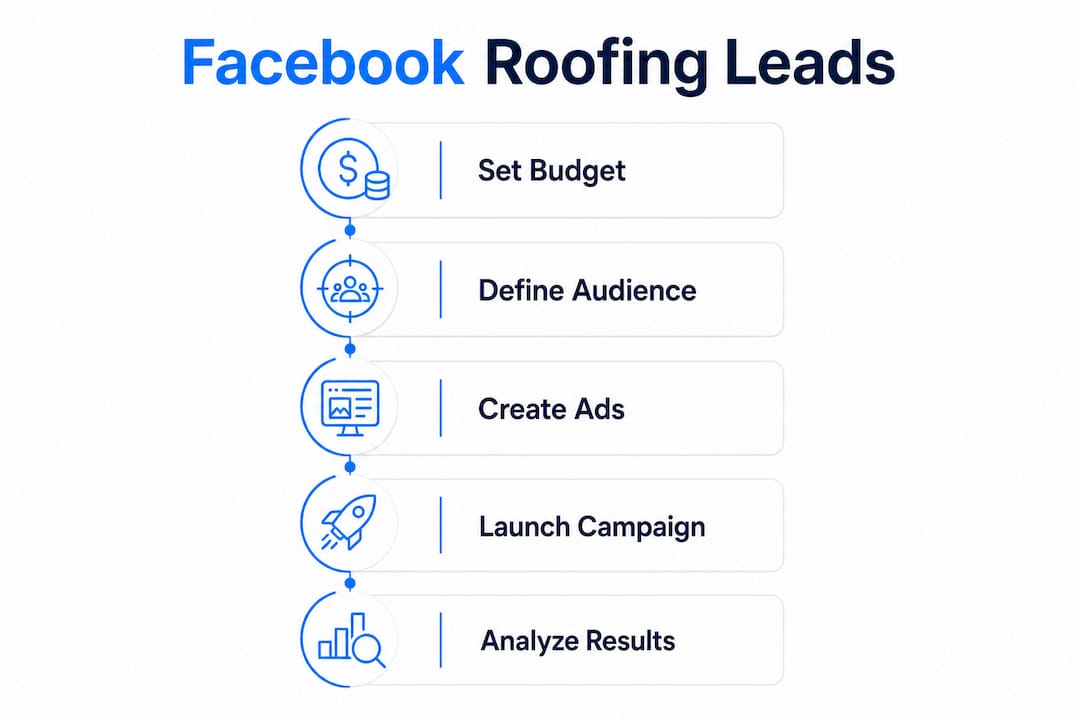
Facebook lead ads for roofing companies generate leads at a median cost per lead between $15 and $75. Compare that to Google search ads, which average a cost per click of $10.70 versus $1.74 on Facebook. The math strongly favors Facebook for volume lead generation.
Your ad creative should lead with a clear offer. “Free roof inspection after the storm” outperforms “Call us for a quote” every time. Match the offer in the ad to the offer in the form. Consistency between ad and form is what drives completions.
Pro Tip: Run two ad creatives simultaneously. One shows a before-and-after photo with a free inspection offer. The other shows a short video testimonial. Let them run for 7 days, then cut the underperformer and put the full budget behind the winner.
Best practices for organic social media posting and engagement for roofing companies
Paid ads generate leads fast. Organic content builds the brand trust that makes those leads easier to close. You need both.
Roofing companies should post 3–5 times per week on their primary social channels. Consistency matters more than volume. A company that posts three times a week every week outperforms one that posts daily for two weeks and then goes silent.
The 80/20 rule applies directly here. Eighty percent of your posts should provide value: tips, local project photos, crew introductions, storm alerts, and maintenance advice. Twenty percent can be promotional: offers, calls to action, and service announcements. Flip that ratio and your audience stops engaging.
Organic content ideas that build trust:
- Post a photo of a completed job in a specific neighborhood with the street name or landmark visible.
- Share a quick tip about what homeowners should check after a windstorm.
- Introduce a crew member with their name, years of experience, and a fun fact.
- Celebrate a 5-star review by sharing it as a graphic with the customer’s first name.
- Post a time-lapse video of a full roof replacement from tear-off to final inspection.
Community engagement is just as important as posting. Engaging with local Facebook groups by liking, commenting, and sharing relevant posts daily builds brand recall without feeling like a sales pitch. When someone in a neighborhood group asks “Does anyone know a good roofer?” you want your company name to appear in the comments from people who recognize you.
Pro Tip: Join 5–10 local Facebook community groups in your service area. Do not post ads. Comment helpfully on storm-related posts, answer questions about roof maintenance, and congratulate neighbors on home improvements. This organic presence generates referral leads that cost you nothing.
How rapid lead follow-up and automation boost roofing Facebook ad ROI
Generating a lead through Facebook is only half the job. What happens in the next five minutes determines whether you close it or lose it to a competitor.
Over 40% of roofing leads go to the first contractor to respond. That single fact should change how you think about your follow-up process. Speed is not a courtesy. It is a competitive advantage.
Here is the follow-up sequence that produces the best conversion rates:
- Text within 2 minutes. When a lead submits a Facebook Lead Ad form, an automated SMS should fire within 60–120 seconds. The message should confirm receipt, introduce your company, and ask when the homeowner is available for a call.
- Call within 5 minutes. A live call from a real person within five minutes of form submission dramatically increases the chance of booking an appointment. Leads go cold fast.
- Connect your Facebook leads to a CRM. Manual email notifications are too slow and too easy to miss. Integrate your Facebook Lead Ads directly with a CRM system so every lead is logged, assigned, and triggered for automated follow-up without human delay.
- Follow up at least 5 times. Most leads do not convert on the first contact. A sequence of texts and calls over 5–7 days keeps your company top of mind without being aggressive.
- Track results by creative and offer. Log which ad creative, which offer, and which targeting set produced each lead. This data tells you where to put more budget and what to cut.
Stat to know: Speed-to-lead infrastructure that connects Facebook lead forms to automated SMS systems delivering texts within 60 seconds dramatically increases close rates for roofing companies. Flying blind without this system means you are paying for leads you never actually work.
Pro Tip: Use a CRM that integrates natively with Facebook Lead Ads. When a homeowner submits a form, the lead should appear in your CRM and trigger an SMS within 60 seconds. If your current setup requires manual steps, you are losing leads every day.
For roofing companies building out their full digital marketing for roofers strategy, pairing social media with strong organic search visibility compounds your results significantly. You can also explore SEO for roofers as a complementary channel that captures homeowners actively searching for roof repair.
Key takeaways
Facebook and social media marketing for roofing companies produces the best results when paid ads, organic content, and automated lead follow-up work together as one system.
| Point | Details |
|---|---|
| Facebook is the primary platform | 71% of U.S. adults use it daily, including 58% of homeowners aged 30–49. |
| Use Facebook Lead Ads, not website links | Native forms convert roughly 3 times better than ads directing to external pages. |
| Post 3–5 times per week | Consistency in organic posting builds brand trust that makes paid leads easier to close. |
| Respond to leads within 2 minutes | Over 40% of roofing leads go to the first contractor to respond. Speed wins jobs. |
| Storm targeting delivers outsized ROI | Geo-fencing affected zip codes after a hail event can produce exceptional returns on small ad budgets. |
What I have learned after years of running roofing social media campaigns
Most roofing companies treat Facebook as a billboard. They post a logo, run a generic ad, and wonder why the phone does not ring. That is not a Facebook problem. That is a strategy problem.
The companies that win on social media do one thing differently. They show up as real people doing real work in real neighborhoods. A photo of your crew finishing a job on Maple Street in your city is worth ten times more than a polished graphic with your phone number. Homeowners want to hire someone they feel they already know.
The second mistake I see constantly is treating paid and organic as separate efforts. They are not. Your organic content builds the audience that makes your paid ads cheaper to run. When someone has already seen your crew on their feed three times, your ad does not feel like an ad. It feels like a reminder to call the roofer they already trust.
The third thing most owners miss is the follow-up. You can run a perfect ad, generate a $20 lead, and lose it because nobody called back for two hours. That is not a marketing failure. That is an operations failure. Fix the follow-up before you scale the budget.
My honest advice: start with a $1,500 monthly ad budget, post four times a week with real job photos, and build an automated SMS follow-up before you spend a dollar on ads. Get those three things right, and Facebook becomes the most reliable lead source your roofing company has.
— Results
Resultsdigitalus can build your roofing social media engine
Running Facebook ads and managing organic content while running a roofing company is a full-time job on top of a full-time job. Resultsdigitalus was built specifically for roofing contractors who want results without the guesswork of figuring out digital marketing alone.
Resultsdigitalus manages Facebook ads for roofing companies from targeting setup to creative production to lead follow-up integration. The agency’s exclusivity model means your campaigns compete against the market, not against another roofer the agency also serves. If you are ready to build a lead generation system that runs while you are on the roof, visit Results Digital’s marketing services to see what a contractor-specific strategy looks like.
FAQ
What is the average cost per lead for roofing Facebook ads?
Roofing-specific Facebook Lead Ads generate leads at a median cost per lead between $15 and $75, compared to Google search ads that average $10.70 per click. Facebook delivers significantly more lead volume per dollar for most roofing companies.
How often should a roofing company post on social media?
Roofing companies should post 3–5 times per week on Facebook and Instagram. Consistency matters more than frequency. Real job photos and crew content outperform stock images in engagement and reach.
Why are Facebook Lead Ads better than sending traffic to a website?
Facebook Lead Ads open a form inside the app, removing the friction of leaving Facebook to visit an external page. Native Lead Ads convert roughly 3 times better than ads that direct users to a website.
How fast should a roofing company respond to a Facebook lead?
Text the lead within 2 minutes and call within 5 minutes. Over 40% of roofing leads go to the first contractor to respond, so speed is the single biggest factor in converting a Facebook lead into a booked appointment.
Which content type performs best for roofing companies on social media?
Before-and-after photos and short video Reels of completed local jobs consistently generate the highest engagement. Content that features real crew members and specific neighborhood references builds trust faster than any generic marketing imagery.
