
If you’re a commercial contractor struggling to keep your pipeline full, you’re not alone. Commercial project leads generation online has gotten harder, not easier. Buyers are more guarded, decision-making involves more people, and generic outreach gets ignored or filtered before it ever reaches a human. This guide breaks down exactly how to fix that. You’ll get a clear framework covering your digital foundation, modern lead generation strategies, AI-powered qualification tools, and outreach sequences built for how commercial buyers actually behave in 2026.
Table of Contents
- Key takeaways
- Understanding buyer intent for commercial projects
- Building your digital foundation for lead capture
- Executing modern lead generation strategies
- Common pitfalls and how to avoid them
- Outreach and nurturing that actually converts
- My honest take on where contractor lead generation is headed
- Ready to grow your commercial project pipeline?
- FAQ
Key takeaways
| Point | Details |
|---|---|
| Signal stacking beats volume | Combining multiple intent signals reduces wasted outreach and surfaces buyers who are actually ready to move. |
| Your digital foundation matters first | A weak Google Business Profile or a slow website will undercut even the best ad spend before leads ever convert. |
| Google LSAs deliver fast, trackable leads | Local Services Ads cost between $15 and $80 per lead and rank based on reviews and responsiveness, not just budget. |
| AI tools now handle early qualification | AI agents manage initial outreach and follow-up autonomously, freeing your team for high-value conversations. |
| Measure cost per opportunity, not just volume | High-growth contractors track pipeline velocity and cost per opportunity to know what lead sources actually pay off. |
Understanding buyer intent for commercial projects
Commercial buyers do not behave like residential homeowners. A decision to hire a general contractor for a $2 million office build involves 6 to 10 stakeholders across finance, operations, and facilities teams. That means your outreach needs to reach multiple people, not just one contact.
Understanding this changes how you approach B2B project leads. You are not selling to a person. You are selling to a buying committee, and each member has a different concern. Finance wants cost certainty. Operations wants minimal disruption. The project manager wants a contractor who communicates clearly and hits deadlines.
The second shift worth understanding is buyer intent signals. Not every company that searches for “commercial roofing contractor” is ready to hire. Intent signals are behavioral clues that a prospect is actively moving toward a purchase decision. These include things like visiting your pricing page, downloading a project portfolio, or engaging with your content multiple times in a short window.
The real power comes from signal stacking. A single signal is a maybe. A cluster of signals, such as a company visiting your site three times, engaging with a LinkedIn post, and requesting a project portfolio in the same week, is a strong indicator of genuine buying intent. Prioritizing those clusters over single data points is one of the most underused tactics in commercial lead generation.
- Topic engagement: Has the prospect consumed multiple pieces of content on the same subject?
- Recency: Did the activity happen in the last 7 to 14 days?
- Depth: Did they read a full case study or just skim a homepage?
- Volume: Are multiple people from the same company showing up in your data?
Pro Tip: Set up a simple spreadsheet or CRM tag that flags any company where three or more signals appear within a 14-day window. Those accounts deserve your first call of the day.
Building your digital foundation for lead capture
You cannot run effective online sales lead generation without the right infrastructure in place. Think of it like sending a sales rep out without a business card or a pitch deck. The tools need to be ready before the traffic shows up.
Here are the four foundations every commercial contractor needs before spending a dollar on ads:
- Claim and optimize your Google Business Profile. Fill out every field, upload project photos, and select the right service categories. This directly affects your ranking in Google Local Services Ads and local search results.
- Build a conversion-focused website. Your site needs a clear headline, a specific call to action above the fold, a project portfolio with real photos, and a fast load time. Slow pages lose leads before you ever know they visited.
- Install lead capture tools. At minimum, you need a contact form, a click-to-call button, and call tracking software. Call tracking tells you which campaigns are actually driving phone calls so you are not flying blind on attribution.
- Set up a basic CRM. Even a simple CRM like a well-structured spreadsheet beats letting leads fall through the cracks. You need a place to log every inquiry, follow-up date, and outcome.
Google LSA ranking depends heavily on your Google Business Profile’s review volume, score, and how quickly you respond to leads. That means reviews are not optional. They are a ranking factor.
Pro Tip: After every completed commercial project, send a direct review request link to your primary contact. A personal message asking for honest feedback converts far better than a generic automated email.

Executing modern lead generation strategies
This is where most contractors either win big or waste money. The difference comes down to using the right channels with the right setup.
Here is a step-by-step approach to the most effective methods for commercial project leads generation online in 2026:
- Launch Google Local Services Ads. Complete the background check and license verification process. Set your service area to match where you actually want to work. LSA costs range from $15 to $80 per lead depending on your trade and market, which makes them one of the most cost-predictable channels available.
- Use commercial construction intelligence platforms. Tools like Construct-A-Lead track over 500,000 projects and surface more than 2,500 new commercial projects monthly, often before public bids are posted. Getting in front of a project owner before the bid goes public is a significant competitive advantage.
- Activate AI-driven lead qualification. AI-driven strategies improve win rates by 76% compared to traditional manual outreach. AI agents can handle initial contact, answer common questions, and qualify prospects before a human rep ever picks up the phone.
- Run targeted Google Ads alongside LSAs. Paid search campaigns targeting commercial-specific keywords give you coverage for prospects who are searching but not yet clicking on service ads. Learn more about the benefits of Google Ads for contractors to see how the two channels complement each other.
| Strategy | Best for | Avg. cost per lead | Speed to results |
|---|---|---|---|
| Google Local Services Ads | High-intent local searches | $15–$80 | Fast (1–2 weeks) |
| Construction intelligence platforms | Pre-bid project discovery | Subscription-based | Medium (ongoing) |
| Google Ads (PPC) | Broad commercial keyword coverage | $30–$120 | Fast (1–2 weeks) |
| AI-powered outreach sequences | Warm prospect nurturing | Low per touch | Medium (30–60 days) |
Common pitfalls and how to avoid them
Generating more leads is not the same as generating better leads. Many contractors fall into the trap of chasing volume, then wonder why their close rate is low and their sales team is burned out. Here is what to watch for.
- Chasing volume over intent. A hundred unqualified leads cost more in time and follow-up than ten well-qualified ones. Focus your budget on channels and signals that indicate genuine buying intent.
- Relying on a single lead source. If all your commercial leads come from one platform and that platform changes its algorithm or pricing, your pipeline dries up overnight. Diversify across at least two or three channels.
- Ignoring lead dispute features in LSAs. Google allows you to dispute invalid leads and get credited back. Contractors who skip this step overpay for leads that were never real opportunities.
- Skipping performance measurement. High-growth sales teams optimize for cost per opportunity and pipeline velocity, not just raw lead count. If you do not know your cost per won project by channel, you are making budget decisions without data.
Conduct a quarterly signal-stack ROI audit to compare what each lead source actually costs against the pipeline it generates. This one habit separates contractors who scale from those who stay stuck.
Pro Tip: Build a simple monthly report that tracks leads by source, cost per lead, close rate by source, and average project value. Four numbers. That is all you need to make smarter budget decisions every month.
Outreach and nurturing that actually converts
Getting a lead into your pipeline is only half the job. Converting that lead into a signed contract requires consistent, well-timed follow-up across the right channels.
Here is how to structure a nurturing sequence that works for commercial buyers:
- Day 1: Initial outreach. Send a personalized email referencing something specific about their project or company. Generic emails get deleted. A message that references their building type, location, or recent news shows you did your homework.
- Day 3: LinkedIn connection or message. Commercial decision-makers are active on LinkedIn. A short, professional message that adds value, such as a relevant case study or a link to a project portfolio, keeps you visible without being pushy.
- Day 7: Follow-up call. By now the prospect has seen your name twice. A brief call to check in and offer to answer questions feels natural rather than cold.
- Day 14 to 30: Content touchpoints. Send a project highlight, a short video walkthrough of a similar completed job, or a relevant industry update. These touches maintain pipeline velocity without requiring a hard ask.
Signal-based sequences typically run 3 to 5 touches over 14 to 30 days, with each touch calibrated to the channel and time of day that gets the best response. Automation tools handle the scheduling, but the content itself should feel personal.
The table below shows how to align your content type with where the buyer is in their decision process:
| Buyer stage | Best content type | Best channel |
|---|---|---|
| Awareness | Blog post, project portfolio | SEO, LinkedIn |
| Consideration | Case study, comparison sheet | Email, LinkedIn |
| Decision | Proposal, reference call offer | Phone, direct email |
| Post-bid follow-up | Project timeline, FAQ doc | Email, phone |
Most cold outreach is now filtered by AI gatekeepers before it reaches a human. That means your messages need to be specific enough to pass the filter and relevant enough to earn a response. Hyper-personalization is not a nice-to-have anymore. It is the price of entry.
My honest take on where contractor lead generation is headed
I have seen contractors spend thousands of dollars on lead lists, directory listings, and spray-and-pray ad campaigns that produce nothing but frustration. The contractors who actually grow, the ones who go from three crews to ten and beyond, are not chasing more leads. They are chasing better ones.
The shift I keep watching unfold is the move away from volume-based thinking toward precision. It is not about how many leads hit your inbox. It is about how many of those leads match your ideal project type, budget range, and geographic focus. When you get that alignment right, your close rate goes up, your average project value goes up, and your team stops wasting time on dead-end calls.
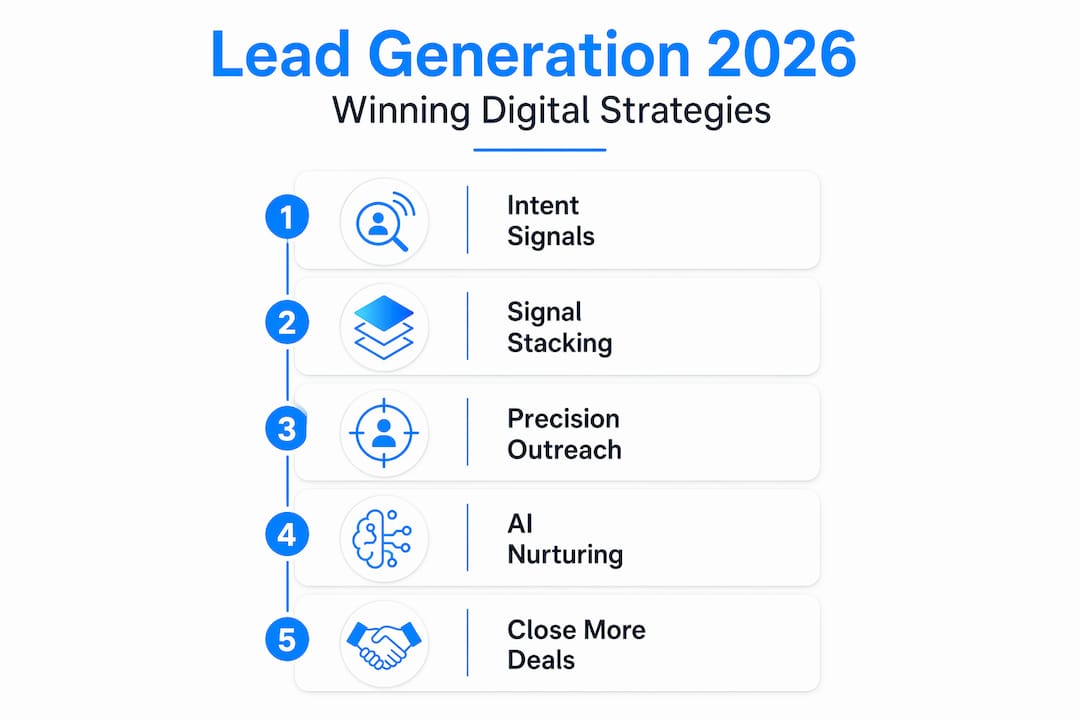
AI tools have genuinely changed the game here. AI agents now handle initial outreach, follow-up, and FAQ responses autonomously, which means your best people spend their time on conversations that actually move toward a contract. That is a real advantage if you set it up correctly.
But here is what I have learned from working with contractors across the country: technology does not replace responsiveness. The contractor who calls back within five minutes still wins more often than the one with the fanciest automation stack. Use the tools to get in front of the right people faster, then show up like a professional when it counts.
Measure everything. Adapt every quarter. And never let a single lead source become your entire pipeline.
— Results
Ready to grow your commercial project pipeline?
If you have read this far, you already know that generating commercial project leads online takes more than a website and a prayer. It takes the right channels, the right tools, and a team that knows how to optimize every piece of the system.
Resultsdigitalus was built specifically for contractors who want to stop guessing and start winning more projects. From Google Ads for contractors to full digital marketing campaigns engineered around your trade and market, every strategy is built to generate leads that actually convert. The exclusivity model means your campaigns work for you alone. No sharing your market with a competitor. If you are serious about scaling your commercial project pipeline, explore how Resultsdigitalus approaches digital marketing for contractors and see what a purpose-built strategy looks like in practice.
FAQ
What does commercial project leads generation online mean?
Commercial project leads generation online refers to using digital channels such as Google Ads, SEO, and construction intelligence platforms to attract and capture potential clients for commercial contracting projects. The goal is to fill your pipeline with qualified prospects who have a real need and budget.
How much do Google Local Services Ads cost for contractors?
LSA costs range from $15 to $80 per lead depending on your trade and market. HVAC leads average $25 to $80, plumbing $20 to $60, and electrical $15 to $50.
What is signal stacking in lead generation?
Signal stacking means combining multiple buyer intent signals, such as website visits, content engagement, and LinkedIn activity, to identify prospects who are genuinely close to making a purchase decision. Prioritizing intent signal clusters reduces false positives and improves your close rate.
How many stakeholders are involved in a commercial buying decision?
Commercial buying decisions typically involve 6 to 10 stakeholders across departments including finance, operations, and IT. Your outreach strategy needs to address multiple decision-makers, not just one contact.
How often should I audit my lead generation performance?
Run a signal-stack ROI audit every quarter to compare lead source costs against actual pipeline generated. This tells you which channels are worth scaling and which ones to cut before they drain your budget.
