
Roofing brand trust signals are specific, verifiable indicators, including third-party verified reviews, elite manufacturer certifications, and documented contractor credentials, that confirm a roofing company’s reliability before you spend a dollar. The industry term for this framework is “social proof and credentialing,” but trust signals is the working language most homeowners use when evaluating contractors. Platforms like GuildQuality, certifications like GAF Master Elite and OC Platinum Preferred, and warranty registration practices are the three categories that separate credible roofing brands from risky ones. If you are a homeowner or property manager preparing for a roofing project, knowing how to read these signals is the difference between a 25-year roof and a 5-year headache.
1. What are the top roofing brand trust signals to look for?
Roofing company trust signals fall into five measurable categories, and the strongest ones are independently verified rather than self-reported. A contractor’s marketing page can say anything. Third-party data cannot be edited.
Here are the primary signals to evaluate:
- Third-party verified satisfaction scores. Platforms like GuildQuality survey every customer independently with no filtering or editing. The construction industry average sits at 87% satisfaction. Any contractor scoring 95% or above over multiple quarters is performing at a genuinely elite level.
- Manufacturer certifications. GAF Master Elite, OC Platinum Preferred, and CertainTeed Select ShingleMaster are not participation trophies. They require audits, training, and demonstrated installation standards. Fewer than 2% of U.S. roofing contractors hold these designations.
- Clear licensing, insurance, and bonding documentation. A legitimate contractor provides a license number you can verify with your state licensing board, proof of general liability insurance, and workers’ compensation coverage. No documentation means no accountability.
- Visual proof of completed work. Before-and-after photo galleries, video walkthroughs, and project case studies show real output. Marketing renders are not proof. Actual job photos are.
- Registered workmanship warranties. A warranty that exists only on paper and was never registered with the manufacturer is not a warranty. It is a promise with no enforcement mechanism.
Pro Tip: Ask every contractor you interview for their GuildQuality profile URL or equivalent third-party survey link. If they cannot provide one, that absence is itself a trust signal.
2. How manufacturer certifications impact roofing brand trust
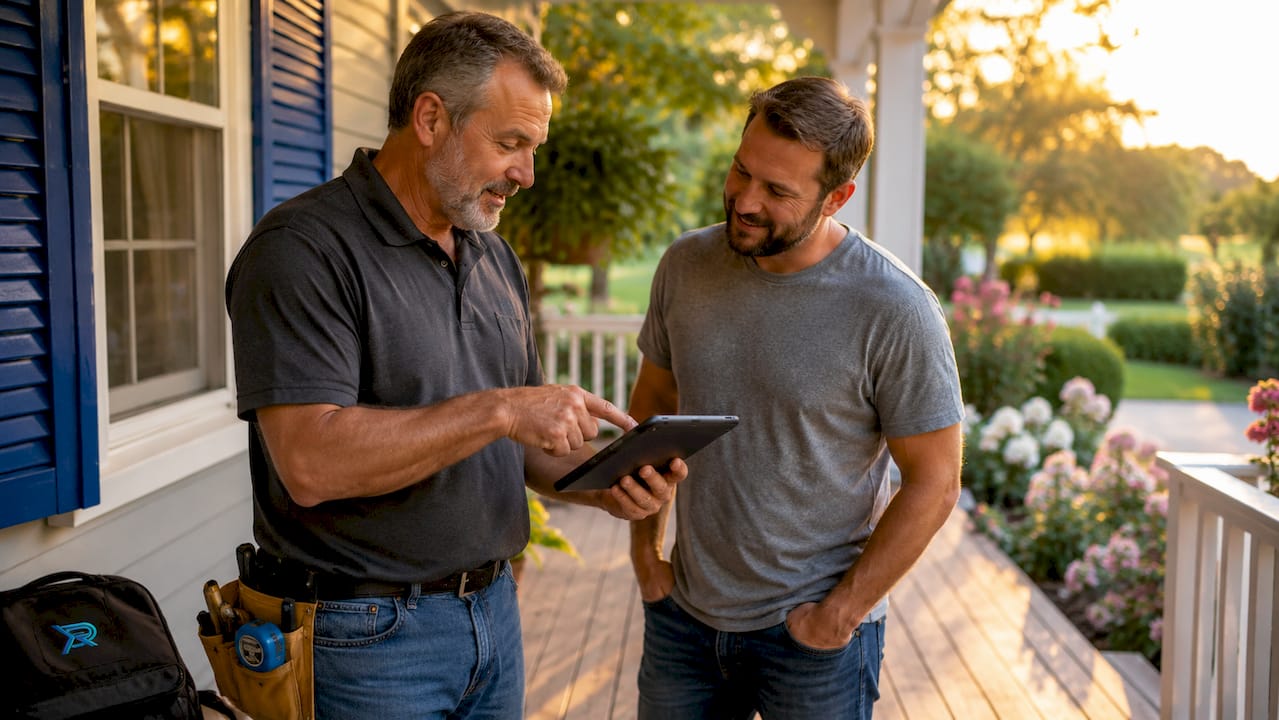
Elite manufacturer certifications are the closest thing roofing has to a board certification in medicine. They are rare, audited, and tied directly to financial accountability through enhanced warranty programs.
GAF Master Elite status is held by roughly the top 2% of roofing contractors in the United States. OC Platinum Preferred is held by fewer than 1%. These are not marketing designations. GAF, Owens Corning, and CertainTeed each require contractors to demonstrate proper licensing, insurance, training completion, and consistent installation quality before granting and renewing these tiers.
The table below compares the three major elite certification programs:
| Certification | Issuing Manufacturer | Estimated % of Contractors | Key Benefit |
|---|---|---|---|
| GAF Master Elite | GAF | Top 2% | Access to Golden Pledge warranty (50-year coverage) |
| OC Platinum Preferred | Owens Corning | Under 1% | System Protection Warranty with labor coverage |
| CertainTeed Select ShingleMaster | CertainTeed | Top tier | SureStart PLUS warranty with extended labor terms |
The financial implication for you as a homeowner is significant. Certified contractors unlock manufacturer-backed system warranties that cover both materials and workmanship. This shifts liability away from the contractor alone and onto a billion-dollar manufacturer. If the contractor goes out of business in year three of a 30-year warranty, the manufacturer still honors the coverage. That protection does not exist with uncertified installers.
Certification status also reduces your risk during the selection process. A contractor who has passed manufacturer audits has already been vetted by a third party with financial skin in the game.
3. Why verified customer reviews are critical trust signals
Self-curated testimonials on a contractor’s own website are the least reliable form of social proof available. Every negative review has been removed before you see the page. Independent survey platforms eliminate that problem entirely.
GuildQuality surveys every customer after project completion. The homeowner receives a direct survey link, responds independently, and GuildQuality publishes the results without editing. Cenvar Roofing holds a 96% “Likely to Recommend” score across more than 5,200 verified responses. Mr. Roofing holds 97% across 808 responses. These numbers mean something because they cannot be curated.
When evaluating roofing customer reviews, look at these four dimensions:
- Volume. A 5-star average from 12 reviews is statistically meaningless. Look for contractors with hundreds or thousands of verified responses.
- Recency. A contractor who earned strong reviews three years ago may have changed crews, ownership, or quality standards. Reviews from the last 12 months carry the most weight.
- Response pattern. How a contractor responds to negative reviews tells you more than the negative review itself. Defensive or dismissive responses are a red flag.
- Platform independence. Google reviews can be flagged and removed. GuildQuality, Houzz, and similar platforms with verified purchase requirements are harder to manipulate.
The industry average satisfaction rate in construction is 87%. A contractor sustaining 95% to 99% over multiple consecutive quarters is not getting lucky. That consistency reflects repeatable process and quality control. Use that benchmark when comparing contractors side by side.
4. Understanding contractor credentials and warranties as trust signals
Credentials and warranties are the legal and financial backbone of roofing brand credibility. Without them, you have no recourse if the work fails.
Here is what to verify before signing any contract:
- State contractor license number. Every state with licensing requirements publishes a searchable database. Verify the number is active and in good standing, not expired or suspended.
- General liability insurance. Request a certificate of insurance naming you as an additional insured for the duration of the project. This protects your property if damage occurs during installation.
- Workers’ compensation coverage. If an uninsured worker is injured on your property, you can be held liable. Verify this coverage exists before work begins.
- Workmanship warranty terms. Material warranties cover defective shingles. Workmanship warranties cover installation errors. The two are separate. A contractor offering only a one-year workmanship warranty on a 30-year roof is telling you something important about their confidence in their own work.
The warranty registration detail is one most homeowners never think to ask about. Manufacturer warranty coverage requires the contractor to register the installation with the manufacturer within 30 days of project completion. Failure to register voids the long-term coverage entirely. You could have a GAF-certified contractor install a premium roof and still lose your warranty because they skipped the registration step. Ask for written confirmation of registration after your project closes.
Pro Tip: Request the warranty registration confirmation number from your contractor within 45 days of project completion. If they cannot provide it, contact the manufacturer directly using your address and installation date to verify registration status.
Understanding roofing craftsmanship standards also helps you ask better questions during the contractor interview process.
5. The 80/20 rule: installation quality as the hidden trust signal
The most overlooked roofing brand trust signal is not a certification or a review score. It is the quality of the installation itself, and you need to evaluate it before the work begins, not after.
Installation quality accounts for roughly 80% of a roof’s longevity. A mid-range shingle installed by a skilled, certified crew outperforms a premium shingle installed by an undertrained one. This is the 80/20 rule applied to roofing: 80% of the outcome depends on the installer, 20% on the material. Most homeowners spend their research time comparing shingle brands when they should be comparing contractor track records.
Homeowners frequently make the mistake of prioritizing the shingle manufacturer over the contractor’s installation expertise. The shingle brand matters, but it matters less than who nails it down. A GAF Master Elite contractor installing a mid-grade shingle will produce a better long-term result than an uncertified contractor installing the top-of-line product.
The practical implication: when you compare two bids, weight the contractor’s certification status, verified review scores, and years of documented experience more heavily than the specific shingle product being proposed. The product is replaceable. The installation is permanent.
6. How a strong online presence amplifies trust signals
A contractor’s digital presence is where trust signals either get communicated clearly or get buried. A well-built website that prominently displays GuildQuality scores, certification badges, license numbers, and project photo galleries converts skeptical visitors into confident leads. A cluttered or outdated site does the opposite.
Effective roofing marketing centers on urgency, proof, and local authority. Trust signals like reviews, licensing documentation, and photo proof of completed work are the proof component. When these elements are easy to find and independently verifiable, they reduce the friction between a homeowner’s first search and their decision to call. When they are absent or hard to locate, doubt fills the gap.
Online branding for roofers directly affects how trust signals are perceived. A contractor with a 97% GuildQuality score buried in a footer gets less credit for that score than one who features it prominently with a direct verification link. The signal exists in both cases. Only one contractor is using it effectively.
Verified customer testimonials displayed with names, project types, and dates carry far more weight than anonymous quotes. If a contractor’s site shows real names, real projects, and links to third-party platforms where you can read the full review, that transparency is itself a trust signal.
Key takeaways
The strongest roofing brand trust signals are independently verified, not self-reported: elite certifications, third-party survey scores, and registered warranties are the three factors that most reliably predict contractor quality and accountability.
| Point | Details |
|---|---|
| Certifications signal elite status | GAF Master Elite and OC Platinum Preferred are held by fewer than 2% of U.S. contractors. |
| Verified reviews beat testimonials | Platforms like GuildQuality publish unedited survey results; look for 95%+ scores across high volume. |
| Installation quality drives longevity | Roughly 80% of roof performance depends on installer skill, not shingle brand. |
| Warranty registration is non-negotiable | Contractors must register with the manufacturer within 30 days or long-term coverage is void. |
| Credentials require active verification | Always confirm license status, insurance certificates, and bonding before signing a contract. |
What I’ve learned after years of marketing roofing contractors
Most homeowners approach a roofing decision the way they approach buying a car: they research the brand on the hood and ignore the mechanic doing the work. That instinct is understandable but backwards.
After working with roofing contractors across the country at Resultsdigitalus, the pattern is consistent. The contractors with the strongest reputations are not always the ones with the most recognizable shingle brands on their trucks. They are the ones with audited certifications, four-digit GuildQuality response counts, and warranty registration processes built into their post-install workflow. Those are operational disciplines, not marketing claims.
The contractors who struggle with trust are usually the ones relying on a polished website and a few cherry-picked Google reviews. Homeowners are getting smarter. They know how to find GuildQuality profiles. They know to ask for insurance certificates. They know to search the state licensing board. The contractors who have nothing to hide are the ones who make all of that information easy to find before you even ask.
My honest advice: use at least three trust signals in combination. Certification status alone does not tell you about customer experience. Reviews alone do not tell you about warranty practices. Credentials alone do not tell you about installation quality. When all three align, you have found a contractor worth hiring.
— Results
How Resultsdigitalus helps roofing companies showcase trust signals
A roofing company with a 97% GuildQuality score and a GAF Master Elite certification loses leads every day if those signals are invisible online. At Resultsdigitalus, we build websites and SEO strategies for roofers that put certifications, verified reviews, licensing documentation, and project galleries front and center where homeowners and property managers can find them. Our work is built exclusively for roofing and contractor businesses, not generic service companies. We helped one Florida roofing company scale from 3 crews to 18 and sell for $60 million. If your trust signals are strong but your digital presence is not communicating them, that is a conversion problem we solve. Explore our roofing SEO services to see how we turn credibility into qualified leads.
FAQ
What are roofing brand trust signals?
Roofing brand trust signals are verifiable indicators of a contractor’s credibility, including third-party verified reviews, elite manufacturer certifications like GAF Master Elite, and documented licensing and warranty practices. They give homeowners objective evidence of quality before committing to a contractor.
How do I verify a roofing contractor’s certification status?
Visit the manufacturer’s website directly. GAF, Owens Corning, and CertainTeed each maintain searchable contractor locators where you can confirm whether a contractor holds active elite certification status in your area.
Why does warranty registration matter?
Manufacturer warranty coverage requires the contractor to register the installation within 30 days of completion. If registration is skipped, long-term coverage is voided regardless of the shingle brand or certification level involved.
Are Google reviews reliable trust signals for roofing companies?
Google reviews carry some weight but can be flagged and removed. Independent platforms like GuildQuality, which survey every customer without editing responses, provide more reliable data. Look for contractors with high scores across hundreds of verified responses.
What is the most important trust signal when choosing a roofer?
Manufacturer certification combined with verified third-party review scores is the strongest combination. Certification confirms installation standards; verified reviews confirm consistent customer outcomes. Neither alone is as reliable as both together.
