
What actually separates a good roofing marketing agency from a bad one?
Choosing the right roofing marketing agency comes down to three non-negotiables: proven roofing expertise, transparent attribution tied to booked jobs, and contract terms that keep the agency accountable every single month. Nearly 70% of roofing companies report frustration with their marketing agency, and the pattern is always the same: vague promises, zero roofing knowledge, and no accountability. You deserve better than that.
Here is what to look for, and what to run from:
Green lights:
- The agency can explain the difference between storm restoration leads and planned replacement leads without you prompting them
- Reporting ties directly to cost per booked appointment and close rate by channel, not impressions or clicks
- Month-to-month contracts, or short initial terms with defined performance milestones and clear exit provisions
- You retain full admin access to your Google Ads account, Google Business Profile, domain, and call tracking platform
Red flags:
- Any guarantee of “page 1 rankings in 30 days” or a specific lead volume. No legitimate agency can promise that. Google’s algorithm is not controllable.
- No roofing-specific case studies. “Home services” references do not count.
- Long-term contracts with no performance benchmarks and no exit clause
- The agency retains ownership of your website or ad accounts if you leave
Pro Tip: Ask every agency candidate to show you an attribution dashboard for a current roofing client. If they cannot connect ad spend to booked estimates, they cannot prove ROI.
Why generic marketing agencies fail roofing contractors
Roofing is not a generic trade. The sales cycle is seasonal, weather-driven, insurance-complicated, and split between emergency repairs and planned replacements. An agency that markets plumbers or dentists with the same playbook will cost you real money.
Effective roofing marketing requires distinct messaging and separate campaigns for emergency repairs versus planned replacements, each with dedicated landing pages built to convert that specific intent. A homeowner searching “roof leak repair now” at 8 AM after a storm needs a completely different message than someone researching “best roofing shingles” six months before they buy.
Storm surge readiness is another capability most generalist agencies simply do not have. Roofing-focused agencies build pre-paused storm campaigns that activate within hours of a weather event, capturing demand spikes before competitors even notice the storm hit. That kind of infrastructure takes roofing-specific experience to build correctly.

The channel mix matters too. Google Local Service Ads deliver some of the most cost-effective qualified roofing leads available, with an average booking rate across a dataset of contractors and tracked spend. LSA rankings depend heavily on responsiveness and call handling, which means your agency needs to understand that missing calls during a storm surge directly tanks your placement. A generalist agency rarely knows this.
How to evaluate agency services, exclusivity, and contract terms
Start with the service stack. A qualified roofing marketing partner should offer integrated SEO, Google Ads, Local Service Ads, Google Business Profile management, call tracking, and CRM integration. These channels need to work together as a system, not as separate line items sold independently.
Exclusivity is a deal-breaker. Ask directly: “Are you currently working with another roofing contractor in my market?” If the answer is yes, every keyword, every campaign, and every strategy they build for you also benefits your local competitor. One agency, one contractor per market. That is the only arrangement that protects your investment.
Contract terms reveal a lot about how an agency views accountability. Watch for these specific clauses:
- Asset ownership: Your domain, website, ad accounts, and call tracking numbers belong to you. Agencies that retain ownership of your digital assets as leverage are running a hostage contract. Walk away.
- Lead quality definitions: The contract should define what counts as a valid lead, including minimum call duration, service area match, and exclusion of spam or wrong-number calls.
- Dispute windows: You need a defined window (typically 7–14 days) to flag and receive credit for invalid leads.
- Termination terms: A 30-day termination-for-convenience clause is standard for any agency confident in its results.
Pro Tip: Demand monthly performance reviews with benchmarks tied to booked leads, not traffic. Flying blind on vanity metrics is how roofing budgets disappear.
Common warning signs of dishonest or ineffective roofing marketing agencies
Spotting a bad agency before you sign saves you months of wasted budget. These are the concrete indicators to watch for:
- Guaranteed rankings or lead counts. Google’s algorithm is not a product any agency controls. Promises of specific results within unrealistic timeframes signal either dishonesty or ignorance.
- Vague service descriptions. “We do digital marketing for contractors” with no roofing-specific detail means they are running copy-paste campaigns that ignore storms, seasonality, and insurance flows.
- Vanity metric reporting. Contractors who focus on clicks and impressions miss the metrics that actually matter: cost per booked appointment and close rate by lead source. If an agency celebrates “80 calls” without telling you how many booked, that is a problem.
- No admin access to your accounts. You should have irrevocable admin access to every platform from day one. No exceptions.
- Long contracts with no exit provisions. A 12-month lock-in with no performance milestones is a trap, not a partnership.
- Generic campaigns ignoring seasonality. If an agency cannot describe how they would adjust your campaign strategy after a hail event, they are not built for roofing.
For a deeper look at common roofing marketing mistakes that cost contractors leads, the pattern of bad agency behavior follows a predictable script.
Questions to ask during agency interviews
The right questions expose whether an agency actually knows roofing or just knows how to pitch it. These are the ones that matter most, along with what a confident, capable agency will say back.
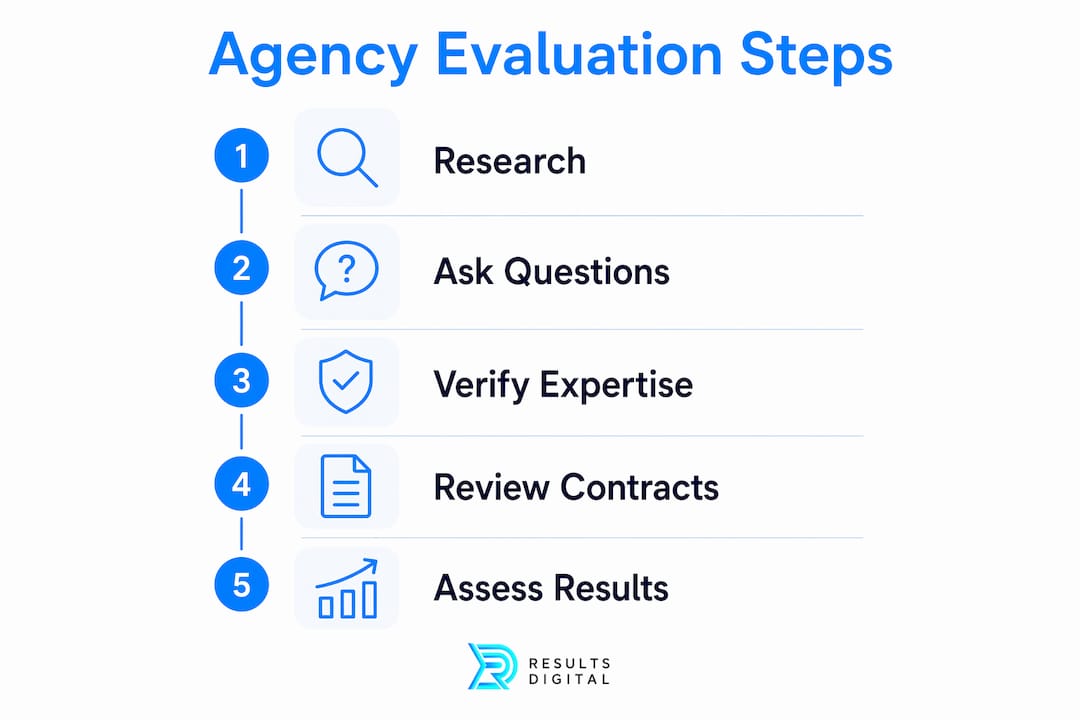
“Can I speak with three of your current roofing clients?” An agency with real results says yes immediately. Hesitation or deflection to “home services” references is a clear signal.
“Walk me through your storm surge campaign strategy.” You want to hear about pre-built, pre-paused campaigns ready to activate within hours of a weather event. Anything vague here means they are improvising when demand spikes.
“Show me your attribution dashboard for an existing roofing client.” This one question separates agencies that track booked jobs from agencies that track clicks. If they cannot show the connection from ad spend to booked estimates, they cannot prove ROI.
“What is your exclusivity policy in my market?” Non-negotiable. Get this in writing.
“What are the exit provisions in your contract?” Good agencies do not need to trap you. A 30-day out is standard for a partner that earns trust monthly.
You can also reference expert guidance on vetting contractors for additional questions that apply directly to agency accountability.
How to compare pricing and determine real value
Roofing marketing pricing varies widely based on market size, competition level, service mix, and your starting point. A new website in a mid-size market costs differently than a full campaign rebuild in South Florida. Avoid cheap flat-rate packages promising SEO, ads, and content for a low monthly fee. In a competitive trade like roofing, something will be fake, automated, or neglected.
The right way to evaluate price is against cost per booked job, not cost per month. An agency charging more but delivering a lower cost per booked appointment is the better investment. Ask every candidate to show you their average cost per lead and cost per booked appointment for roofing clients in comparable markets.
Watch for hidden fees: setup costs, tool fees for call tracking platforms, hosting charges, and ad spend minimums should all be disclosed upfront. A transparent agency lists these clearly before you sign.
What to expect during onboarding and in the first 90 days
Onboarding with a qualified roofing marketing agency follows a predictable arc. The first two to four weeks cover account access, technical setup, call tracking installation, and campaign architecture. Paid ads can stabilize within 2–6 weeks. SEO and local SEO take 3–6 months for meaningful movement, and competitive city-plus-service rankings can take 6–12 months.
A realistic agency sets these timelines upfront and ties them to milestones, not promises. Month one should produce a baseline report showing current lead volume, cost per lead, and attribution by channel. Month three should show measurable improvement in booked appointments with clear data on what is working and what needs adjustment.
If an agency cannot show you a structured onboarding plan with defined phases and measurable checkpoints, you are signing up for improvisation. The roofing lead generation process requires a system, not a series of disconnected tactics.
Resultsdigitalus: built exclusively for roofing contractors
Resultsdigitalus is the agency built specifically for contractors who are done paying for generic marketing that does not move the needle.
Founded in 2015 by veteran Preston Toor in Montgomery, Texas, Resultsdigitalus works exclusively with roofing contractors, gutter contractors, siding companies, and general contractors across the United States. The exclusivity model means one company per trade per market, so your SEO for roofers, Google Ads, Meta Ads, and website are built to win your market, not split it. No long-term contracts. Every month, the results have to earn your continued business. The proof is concrete: Resultsdigitalus helped a Florida roofing company scale from 3 crews to 18 before selling for $60 million. That is what specialized, accountable contractor digital marketing actually looks like.
Key Takeaways
The right roofing marketing agency proves its value through booked jobs, not impressions, and earns your business month after month with transparent attribution and roofing-specific expertise.
| Point | Details |
|---|---|
| Demand roofing-specific proof | Ask for case studies with cost per booked lead, not general home-services references. |
| Own all your digital assets | Contracts must guarantee your admin access to ad accounts, domain, and Google Business Profile. |
| Reject vanity metric reporting | Track cost per booked appointment and close rate by channel, not clicks or impressions. |
| Verify exclusivity in your market | Confirm the agency does not serve a competing roofer in your service area before signing. |
| Resultsdigitalus | Veteran-owned, roofing-exclusive agency with no long-term contracts and a documented $60M client growth result. |
