
TL;DR:
- Many roofing companies waste their ad budget on low-quality leads due to ineffective targeting and poor lead qualification.
- Focusing on high-value reroofing and optimizing campaign data can dramatically increase return on ad spend and business growth.
- Operational inertia and short-term tactics often hinder long-term profitability because companies fail to track and prioritize profitable job types.
You’re spending real money on Google and Facebook ads, watching the clicks roll in, and still waiting for the phone to ring with serious customers. It’s one of the most frustrating experiences a roofing company owner can face. The dashboard looks active, the budget is burning, but the leads showing up are tire-kickers asking about a small patch job, not homeowners ready to invest in a full reroof. The root causes of this disconnect are specific, fixable, and more common than most marketing guides admit. This article breaks down exactly what’s going wrong and shows you a clear path forward.
Table of Contents
- The biggest misconception: More clicks mean more leads
- Budget waste from poor local targeting
- Lead quality: The game changer for roofing ROI
- Seasonality and timing: Capitalizing on peak demand
- Turning insights into action: Steps to improve ad performance
- The uncomfortable truth most roofing marketers ignore
- Unlock your roofing ad potential with expert support
- Frequently asked questions
Key Takeaways
| Point | Details |
|---|---|
| Lead quality > volume | Focusing on high-value leads drives much better ad ROI than just getting more clicks. |
| Targeting is critical | Precise local targeting prevents wasted budget on out-of-area prospects. |
| Act fast after storms | Rapid campaign launches after weather events capture most high-intent leads. |
| Benchmarks can mislead | Industry averages hide the gap between low- and high-profit roofing jobs. |
| Test, track, optimize | Continually measuring lead quality and campaign performance is key to long-term improvement. |
The biggest misconception: More clicks mean more leads
Every roofing company owner who has run digital ads has felt the pull of vanity metrics. The campaign dashboard shows hundreds of clicks, a low cost per click, and impressive impression numbers. It feels like momentum. But those numbers can mask a serious problem: clicks from the wrong people at the wrong stage of their decision.
The gap between a curious click and a booked job is enormous in roofing. A homeowner who just noticed a small drip may click your ad out of curiosity, but they’re nowhere near ready to approve a $15,000 project. Meanwhile, a homeowner who just had a tree fall on their roof is ready to act today. Both show up as clicks in your analytics, but only one of them matters to your revenue.
Benchmarks break down without lead quality data because a repair lead averaging $850 per job generates a completely different return on ad spend compared to a reroofing lead averaging $14,500. When you average these two types together, your metrics look mediocre, but the real story is hidden. You could be running a phenomenal campaign for high-value jobs and a terrible one for low-value repairs simultaneously, and your blended numbers would never reveal it.
Here are the most common mistakes roofing companies make when interpreting ad metrics:
- Optimizing for lowest cost per click instead of lowest cost per qualified lead
- Tracking total lead volume instead of breaking down leads by job type and value
- Using industry-wide benchmarks that mix repair and replacement campaigns
- Ignoring phone call quality and only counting form fills
- Measuring success weekly instead of looking at monthly revenue generated
If your roofing ad copywriting is aimed at anyone with a roof rather than homeowners facing real, urgent problems, you’re essentially paying to attract the least profitable segment of your market. Smart ad copy filters out low-intent browsers before they ever click.
“The click count on your dashboard is not a revenue forecast. It’s a starting point for asking better questions about who is actually showing up and why.”
Budget waste from poor local targeting
Once you understand what you’re measuring, the next problem reveals itself quickly. Broad or insufficient local targeting leads to budget waste on out-of-service-area clicks and low-conversion areas, which is a preventable drain that quietly eats your monthly ad spend.
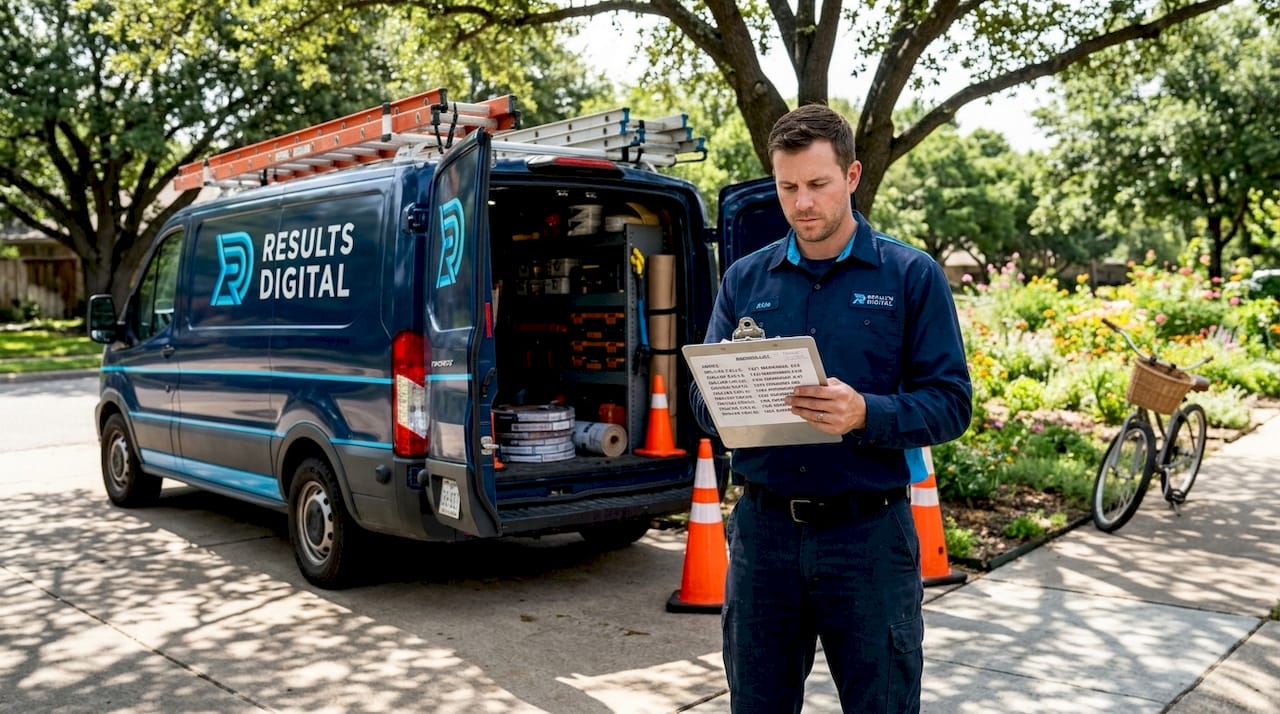
Picture a roofing company based in suburban Dallas that sets its targeting radius to 50 miles. That sounds reasonable until you realize 30% of clicks are coming from rural areas two counties over where the company doesn’t operate, or from dense urban zip codes where the competition is so intense that conversion rates are extremely low. Every one of those clicks costs money and returns nothing.
Effective local targeting in roofing ads isn’t just about drawing a circle on a map. It requires understanding which neighborhoods generate the highest average job values, which zip codes have homes old enough to need replacement, and which areas are currently being hit by weather events. That level of precision takes deliberate setup, not default settings.
Here’s what strong local targeting actually looks like:
- Exclude zip codes outside your service boundary at the campaign level, not just as an afterthought
- Layer in demographic targeting such as homeowners aged 35 to 65 with household incomes above $75,000
- Separate campaigns for your top-performing neighborhoods versus experimental expansion areas
- Use ad scheduling to show your budget heavily during business hours when homeowners can call and book
- Monitor which zip codes generate closed jobs, not just leads, and shift budget accordingly
Pro Tip: Before scaling a campaign to your full service area, test it in your top three zip codes for 30 days. If it converts there, you have a proven model you can expand with confidence rather than spreading budget thin across an untested region.
“The best targeting strategy is built from your closed job history, not from platform defaults. Your own data is more valuable than any algorithm.”
With targeted ads for roofing set up correctly, you stop subsidizing irrelevant clicks and start concentrating your budget where the returns are real.
Lead quality: The game changer for roofing ROI
Targeting brings the right people in. But knowing which leads actually improve your bottom line requires a sharper lens than most roofing companies apply to their marketing data.
The single biggest lever in roofing ad performance is not your click-through rate or your cost per click. It’s your ability to identify, prioritize, and close high-value reroofing leads over low-value repair inquiries. The return on ad spend difference is not marginal. It’s dramatic.
| Lead type | Avg. job value | Typical ROAS | Profitability |
|---|---|---|---|
| Repair inquiry | $850 | 2.9x | Low |
| Full reroof | $14,500+ | 22x | High |
| Storm damage reroof | $16,000+ | 25x+ | Very high |
Optimizing for high-value reroofing jobs instead of volume of any kind can produce a 22x return on ad spend versus 2.9x for repair-focused campaigns. That’s not a small improvement. That’s the difference between a struggling campaign and a profitable business engine.
Here’s a step-by-step approach to qualifying and tracking meaningful leads:
- Set up separate phone tracking numbers for each campaign so you know exactly which ad drove which call.
- Record and review call quality weekly, tagging calls as repair inquiry, reroof inquiry, storm damage, or commercial.
- Connect your CRM to your ad platform so that closed job revenue feeds back into campaign performance data.
- Build custom audiences of homeowners who engaged with reroof-related content and exclude those who only viewed repair pages.
- Adjust bidding strategy to favor the keywords and audience segments that historically generate full replacement jobs.
The reason most roofing companies miss this is simple. Tracking lead quality takes more setup than tracking lead volume. But every company that makes this shift finds the same thing: they were spending 40 to 60 percent of their budget on leads that would never pay off at scale. Cutting those and reinvesting in proven high-value segments often increases revenue while reducing total ad spend.
Seasonality and timing: Capitalizing on peak demand
Lead quality sets your profit floor, but timing is what drives volume. Roofing demand is not steady throughout the year. It spikes sharply after weather events, peaks in late spring and early fall in most U.S. markets, and dips during winter months. If your ads run the same message year-round, you’re leaving a substantial portion of your potential market untouched.
Rapid post-storm response on Facebook and Google can capture up to 70% of available leads in a storm-affected area. That window is short and intensely competitive. Companies that have storm-response ad creative ready to activate within 24 hours of a major weather event consistently outperform those that scramble to write new copy after the fact.
| Campaign period | Lead volume | Avg. intent level | Recommended approach |
|---|---|---|---|
| Post-storm surge (0 to 5 days) | Very high | Urgent | Storm damage messaging, rapid response |
| Peak season (April to June) | High | Strong | Replacement and upgrade focus |
| Shoulder season (July to Sept) | Moderate | Mixed | Both repair and reroof messaging |
| Off-season (Nov to Feb) | Low | Low | Retargeting and brand awareness |
Here are the steps to rapidly pivot your ad campaigns after a major storm:
- Monitor weather alerts and hail tracking services in your service area so you know within hours when a damaging storm has passed through.
- Activate pre-built storm damage ad creative immediately, including image ads showing hail damage and urgency-based headlines.
- Increase your daily budget by 50 to 100 percent for the first five days post-storm when competition is highest and intent is strongest.
- Launch a dedicated landing page for storm damage claims that loads fast on mobile and has a one-tap call button above the fold.
- Follow up storm campaigns with retargeting ads aimed at people who visited your site but did not call, since many homeowners take two to five days to make a decision.
Pro Tip: Build your storm-response ad set inside your ad account before storm season starts. Pre-load the creative, write the copy, set the targeting, and pause it. When a storm hits, you activate in minutes instead of scrambling for hours while competitors lock up all the leads.
Understanding roofing marketing strategies that account for seasonal timing is not optional. It’s table stakes for any company trying to grow in a weather-driven market.
Turning insights into action: Steps to improve ad performance
Armed with this context, the real work is applying it consistently. Most roofing companies know their ads could perform better. Few take the specific steps that compound into meaningful results over time.
Here is a focused action list that improves performance without requiring a full campaign rebuild:
- Audit your current targeting and eliminate any zip codes or radius areas where you have never closed a job. This alone can reduce wasted spend by 20 to 35 percent.
- Separate repair and reroof campaigns so you can measure performance independently and allocate budget based on which actually drives revenue.
- Add negative keywords for terms like “DIY roof repair,” “roof repair cost estimate,” and “how to fix a leaky roof” that attract non-buyers.
- Switch bid strategy from maximize clicks to maximize conversion value once you have enough data, typically after 30 conversions per campaign.
- Review call recordings weekly and use what you hear to rewrite ad copy that filters out low-intent callers before they click.
- Test one new ad creative element per month, such as a headline, image, or offer, so you build a library of proven assets rather than guessing.
- Set up Google Analytics goals tied to specific pages like your reroof quote form, not just any page visit, to measure actual buying intent.
These roofing marketing ideas are not theoretical. They are the exact adjustments that separate roofing companies paying too much per lead from those running profitable, scalable ad operations.
The uncomfortable truth most roofing marketers ignore
Here is something most roofing marketing guides will not tell you plainly: the majority of underperforming campaigns are not a tactics problem. They are an operational inertia problem. Companies know they should track lead quality. They know they should separate campaigns by job type. They know they should respond faster to storm events. But the pressure to show short-term results, typically cheap leads and high volume, keeps them locked into strategies that look productive but generate little actual revenue.
Marketing teams get evaluated on cost per lead. Sales teams get evaluated on close rate. But almost nobody gets evaluated on profit per closed job from each specific campaign. That gap is where money disappears. When a marketing director presents 200 leads at $45 each, it looks successful. If 170 of those are repair inquiries that generate $850 jobs, the actual return is far below what the company needs to grow.
Veteran marketers in this industry do one thing differently. They work backward from the jobs that generate real margin, identify the ads and keywords and audiences that produced those jobs, and then put more budget behind exactly those elements. It sounds obvious. Very few companies actually do it because it requires connecting ad data, CRM data, and job revenue data into a single view, which takes setup time that feels like overhead.
The quick-fix mindset compounds this problem. A company will try a new ad platform for six weeks, see mediocre results, and move on without understanding that they were measuring the wrong outcomes. The targeted local ad strategy that generates $300,000 in annual revenue from reroof jobs looks worse in the dashboard than a cheaper strategy producing 3x the lead volume at a fraction of the job value. Chasing the number that looks good on a report is the fastest way to stay stuck.
Sustainable growth in roofing advertising comes from one discipline above all others: tracking which jobs generate real profit and doubling down on the campaigns that create more of them.
Unlock your roofing ad potential with expert support
If the patterns described in this article sound familiar, you’re not alone. Most roofing companies running their own ads hit the same walls because the platform makes clicks easy to buy and profit hard to track.
Results Digital works exclusively with roofing and exterior contractors, which means every strategy we build is already calibrated for your market, your seasonality, and your job types. We combine roofing SEO services with targeted paid campaigns designed around the leads that actually move your revenue, not just your dashboard. Whether you need a full campaign overhaul or want to sharpen your current approach, our lead generation tips for trades and proven frameworks are built to deliver booked jobs, not just clicks. Reach out today to see how we operate and why roofing companies trust us to grow their businesses without long-term contracts or conflicts of interest.
Frequently asked questions
What is the most common reason roofing ads underperform?
The most common reason is poor local targeting that wastes budget on people outside your service area or in low-conversion zones, which drains spend before it can reach real buyers.
How can I tell if my roofing ads are attracting the wrong kind of leads?
If your calls are mostly repair inquiries rather than reroof requests, your ads likely need stronger qualification because repair leads average $850 per job compared to $14,500 for reroofing, a gap that makes the difference between growth and stagnation.
Do roofing ads work better during storm season?
Yes, significantly. Companies that activate storm-response campaigns quickly after weather events can capture up to 70% of available leads in the affected area, far outpacing competitors who react slowly.
What’s more important: Cost per click or profit per lead?
Profit per high-value lead wins every time. Optimizing for $14,500+ reroof jobs produces a 22x return on ad spend, while chasing low cost-per-click on repair campaigns delivers only 2.9x, making the focus on cost per click a costly distraction.
